Turning passing trains into power
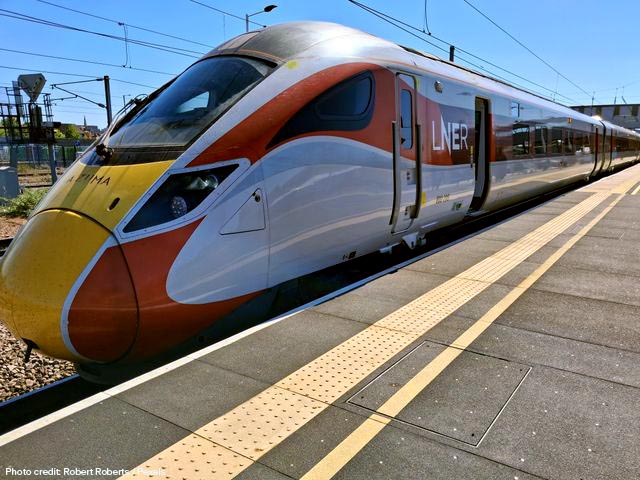
Rail innovation is increasingly focused on a smarter, more sustainable use of infrastructure - and a new UK trial is doing exactly that by turning passing trains into a source of renewable energy.
Three trackside wind turbines installed along the East Coast Main Line are capturing the turbulent airflow generated by high-speed trains and converting it into electricity. Developed by LNER in partnership with Treeva, the turbines can be deployed on unused railway land and can operate without a grid connection. These three turbines are such an important innovation that they have been given quite unique names: "Windiana Jones", "Sir Spins-a-lot", and "AC Breezy".
How does this happen? When the front of a train hits stationary air, it generates a high-pressure area of significant turbulence that can thus be used to spin the wind turbines. You can read more on how electrical energy is generated through wind power in our FAQ page.
Small innovation, big impact
Each compact turbine has the potential to power essential railway systems, including station lighting, CCTV, and passenger information displays. At scale, the technology could significantly reduce carbon emissions while improving energy efficiency across the network.
More importantly, it demonstrates how rail infrastructure can evolve from being energy-intensive to energy-generating.
Enabling the next generation of rail infrastructure
As these technologies develop, the supporting infrastructure becomes critical. Trackside systems such as signalling and overhead line equipment must operate dependably in demanding environments which can be subject to vibration, weather exposure, and constant operational stress.
These place increasing importance on cable solutions that ensure safe, consistent power distribution.
At Eland Cables, we support evolving rail requirements with Network Rail approved high-performance cables, including:
- Trackside Power cables
- Signalling cables
- Communications cables
- Rail Overhead Line Equipment (OHL) wires
Powering what comes next
Innovations such as trackside turbines highlight a clear direction for the rail industry: smarter infrastructure, increased innovation, and integrated energy solutions.
Because – as the railway industry moves towards a lower-carbon future - it’s not just about how trains are powered but how the entire network performs and what opportunities are identified to achieve such transition.
Need help choosing your cable?
Contact our Sales team who will be happy to discuss your requirements further.
Sources: eandt.theiet.org