Renewables in Motion: Ranking Wind’s Top Nations 2021–2026
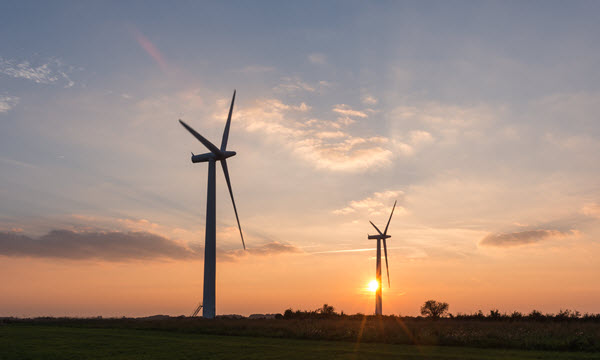
Over the past few years, global wind power has entered a period of intense acceleration, with installations surging across major economies. According to WWEA Global Statistics global wind capacity exceeds 1,346 Gigawatt, with 169 Gigawatt added in 2025.
In this article, we break down the top 10 wind energy nations by operating capacity as of February 2026, and what this means for the broader renewables landscape.
1) China
China has 542,758 MW of operational capacity, operating the word’s largest wind power fleet, accounting for nearly half of global installations and offshore expansion growing from under 5 GW in 2018 to 42.7 GW in 2025.
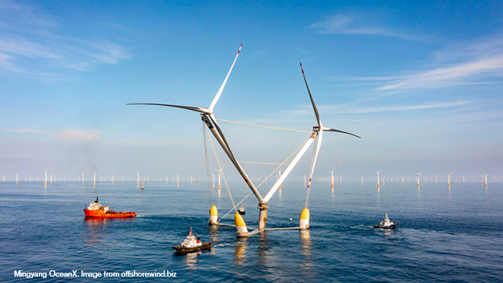
Massive onshore bases span Inner Mongolia and Xinjiang, while rapidly expanding offshore grids dominate coastal waters, backed by deep-sea floating platforms and national carbon neutrality targets. Guangdong province's 11.4 GW offshore wind fleet has the potential to avoid roughly 23 million tonnes of CO₂ each year if fully operational. The province is also home to Mingyang’s OceanX, the world’s largest-capacity floating platform.
2) United States
The United States has 157,594 MW of operational capacity, distributed across more than 1,300 wind farms, with Texas leading the nation in total installed capacity, while Iowa generates over 57% of its total in-state electricity from wind. Wind has remained the largest source of renewable electricity in the U.S since 2019.
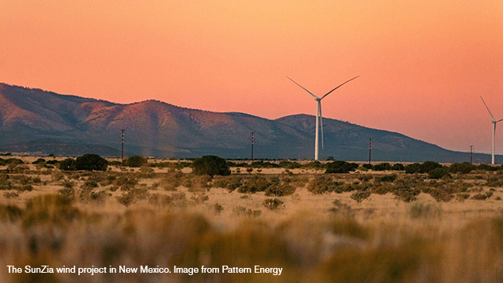
Currently, the largest wind farm in the U.S is theSunZia Wind Project in New Mexico. Originally conceived almost two decades prior, and construction beginning in 2023, the project was finally operational as of June 2026. Developed by Pattern Energy, the project generates 3.5 to 3.65 GW of power using 916 turbines. Connected via a 550-mile high-voltage direct current (HVDC) transmission line to Arizona and California, it generates enough clean energy to power roughly 1 million homes.
3) Germany
Germany has 50,536 MW of operational capacity, with a massive wind power fleet exceeding 73 GW in total capacity (over 63 GW onshore and nearly 11 GW offshore). Onshore wind spans over 28,000 turbines, making it the largest onshore fleet in Europe, while offshore installations in the North and Baltic seas continue rapid expansion toward a 30 GW target by 2030.
Between January and July 2026, Germany commissioned 587 new wind turbines with a combined capacity of 3,948 MW, up from 484 turbines and 2,584 MW in the same period last year — a 53 percent increase in capacity terms.
4) India
India has 38,937 MW of operational capacity, making it the 4th largest in the world. Most wind farms sit in the coastal like Gujarat, Tamil Nadu, Karnataka, Maharashtra, and Rajasthan.
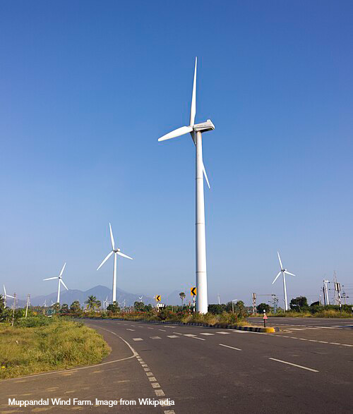
The Muppandal Wind Farm in Tamil Nadu is the largest operational onshore site at 1,500 MW, which makes it the 4th largest operational onshore wind farm in the world.
India aims to reach 100 GW to 140 GW of wind capacity as part of its 500 GW non-fossil fuel goal, however the country faces challenges with upfront equipment costs and high interest rates slowing down rapid building.
5) Brazil
Brazil has 35,718 MW of operational capacity, with a rapidly growing onshore wind power sector with over 30 gigawatts (GW) of operational capacity. Roughly 90% of turbines sit in the rural Northeast (states like Rio Grande do Norte, Bahia, and Piauí) due to exceptionally strong, steady wind patterns, with additional output from southern states like Santa Catarina.
There are currently no operational offshore wind projects in Brazilian waters, however despite a degree of regulatory uncertainty and a lack of transmission infrastructure needed to accommodate a new energy supply chain from offshore wind, several local and international players are already looking at opportunities across the country and remain optimistic about what Brazil has to offer.
6) Spain
Spain has 31,007 MW of operational capacity, with land-based wind power capacity across thousands of turbines, serving as a global leader in clean energy. Wind power routinely supplies a major share of the nation's electricity, helping the mainland grid achieve historic milestones of 100% renewable generation.
Operators are increasingly pairing older wind sites with solar PV and battery storage to stabilise output. They are also supporting the circular economy with decommissioned projects achieving high component recovery rates, recycling steel, fibreglass and copper elements.
7) United Kingdom
The UK has 28,965 MW of operational capacity, featuring roughly 16.6 GW of operational offshore capacity and extensive onshore sites. Major offshore hubs like the Walney Extension Offshore Wind Farm Project in the Irish Sea and East Anglia ONE off the Suffolk coast spearhead this green energy generation.
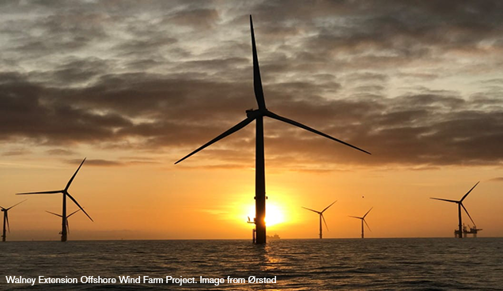
National output regularly shatters previous records, hitting peaks above 23,800 MW in half-hourly generation metrics.
8) France
France has 25,610 MW of operational capacity. The country is rapidly expanding its wind energy operations, highlighted by the recent launch of pioneering floating offshore farms like the 30 MW EFGL floating wind project in the Mediterranean and massive tenders targeting over 10 GW of new offshore capacity.
France has set a target of 45 GW offshore wind capacity by 2050, representing 20 per cent of the country’s electricity needs. Under its Third Multiannual Energy Programme (PPE 3), the government aims to reach an installed capacity of 15 GW by 2035.
9) Canada
Canada has 17,709 MW of operational capacity, with the onshore wind sector producing over 36 TWh of electricity annually. Wind is currently the lowest-cost source of new power in the country and is projected to drive roughly 70% of Canada's near-term renewable capacity growth.
The Canada Energy Regulator reports that planned projects will add over 6,000 MW of new wind power by 2030. While Canada has no operational offshore wind farms yet, Atlantic provinces like Nova Scotia and Newfoundland are establishing regulatory frameworks (such as joint federal-provincial regimes) to tap massive coastal wind potential.
10) Sweden
Sweden has 16,547 MW of operational capacity. Wind power is Sweden's fastest-growing energy source. The nation aims for 100% fossil-free electricity production by 2040 and net-zero emissions by 2045, backed by major industry groups like the Swedish Wind Energy Association.
Most operational capacity is onshore, with massive installations clustered in northern price zones (SE1 and SE2) where industrial demand for green power is high. While historical offshore output was smaller, sites like Karehamn (48 MW) operate alongside extensive new planning for bottom-fixed and floating offshore arrays in southern waters.
Our Role in Wind Energy
With electrical cables playing a vital role in the growth of the global wind energy sector, it puts Eland Cables at the forefront of powering this sector of the renewable landscape. From automation, control, and data to low, medium, and high-voltage power cables, our products are designed to withstand the rigorous demands of both onshore and offshore wind installations. Each cable is rigorously tested to deliver reliability, durability, safety and performance in compliance with international standards.
At the heart of our mission is a commitment to excellence, creating meaningful change, and driving progress towards a sustainable, cleaner, greener energy future. With a proven track record in supporting commercial and utility-scale wind initiatives, our solutions are tailored to the unique challenges of renewable installations, ensuring every project achieves its full potential in driving the energy transition.
Together, we are propelling an electrified future. Download our industry brochure for key project cables and to learn more about our work with the Renewables industry across solar, wind and hydroelectric or talk to a member of our Renewable Energy team to discuss your upcoming project.