EU to require data centres to disclose energy and water efficiency
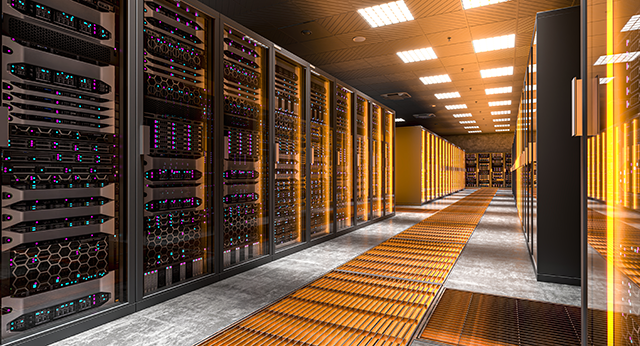
The European Commission proposed rules in September 2026 requiring data centres in Europe to disclose how efficiently they use energy and water, as concerns grow over their consumption of resources.
Growing data centre capacity
Data centres are essential to Europe's digital future. They are also one of the world's fastest growing sectors, currently accounting for around 2.5% of EU electricity consumption, and projected to consume more than 3% of overall electricity demand in the EU by 2030, according to the International Energy Agency.
The EU wants to triple its data centre capacity over the next seven years, to support the rapid development of AI and attempt to cut the reliance on US Big Tech.
This growth puts pressure on electricity grids and the use of natural resources, such as water, and contributes to increased carbon emissions. To limit these impacts and further support the integration of sustainable data centres in the energy systems, the European Commission has proposed a common rating scheme for data centres aimed at increasing transparency on their energy use and supporting their sustainable integration into Europe's energy system.
Key details of the proposal
The key details of the proposal for a common rating scheme for data centres in the EU include:
Scope and threshold: Applies to facilities across the EU with a capacity of 500 kW or greater.
Rating system: Facilities will receive an electronic A-to-G rating label (similar to labels used for household appliances like fridges or dishwashers) measuring energy efficiency and water usage effectiveness.
Disclosures required:
- Energy and water efficiency metrics (such as Power Usage Effectiveness (PUE) and Water Usage Effectiveness)
- Local water stress: Operators must disclose the relationship between their water consumption and local water stress levels.
- Grid contribution: Includes reporting on grid flexibility and waste heat reuse (such as feeding heat back into local heating networks).
What's not included: The proposal does not set caps or limits on total energy or water consumption, nor does it force operators to disclose their total raw power use.
There's also seemingly no benchmark against which the nuance of site and the impacts on wildlife and ecosystems, such as habitat loss and fragmentation, noise and vibration pollution, light pollution, or aquatic harm. Organisations like The Wildlife Trusts are calling for mandatory environmental checks, strict Environmental Impacts Assessments (EIAs), and a “precautionary approach” to ensure new digital infrastructure does not compromise regional biodiversity goals or accelerate species decline.
What is the current Timeline?
The legal proposal establishing the common rating schemelegal proposal establishing the common rating scheme is now subject to a 2-month scrutiny period by the European Parliament and Council before entering into force. The first sustainability labels are expected to be displayed starting in August 2027. The framework could later pave the way for mandatory minimum efficient standards.
Public consultation
A consultation on minimum energy performance standards is open through 14th December 2026. Users on online forum Reddit discussing the proposal expect that transparent tracking will expose operational inefficiencies, although they are concerned any repercussions for non-compliance will not be strict enough to drive rapid change.
What are PUE and WUE?
The "always-on" expectation of data centres means that they need a lot of power to run, and which is why energy efficiency is a key feature in data centre planning and long-term performance, but so how is the energy data centres consume measured?
Power Usage Effectiveness (PUE) tracks how much extra energy a facility burns to run infrastructure such as cooling, lighting, and power backups.
The formula for PUE is: Total Facility Energy Consumption ÷ IT Equipment Energy Usage = PUE
Total Facility Energy Consumption is the cumulative energy used by the entire site, typically measured directly at the utility meter.
IT Equipment Energy Consumption is the energy consumed purely by servers, storage, and networking hardware, typically measured at the Power Distribution Units (PDUs).
A perfect PUE score is 1.0, meaning 100% of the incoming power goes directly to the IT kit. The lower the score, the more efficient the facility. The global average Power Usage Effectiveness (PUE) for data centres is 1.52 to 1.54 according to recent industry data, reducing dramatically from around 2.5 in 2007. This has largely plateaued in recent years due to the balance of older smaller facilities alongside modern builds. Hyperscale data centres often achieve a lower PUE and , major cloud operators like Google achieve a much lower fleet-wide PUE of 1.09 through custom hardware and AI-managed cooling. In 2025 Google’s data centres delivered over 3 times more compute performance per unit of energy than five years ago, driven largely by TPU energy efficiency improvements and their deployment to support AI.
How does AI affect data centre power consumption?
The explosive growth of artificial intelligence (AI) infrastructure is a primary driver behind the European Union's push for strict data centre consumption and transparency rules.
AI significantly increases data centre power consumption due to intensive server computation, continuous GPU workloads, and the massive cooling infrastructure required to manage excess heat. While traditional enterprise data racks typically consume 10 to 20 MW, AI-ready facilities frequently scale from 100 to 300 MW (and some hyperscale campuses approach 1 GW). Cooling systems, including chillers, water towers, and specialised liquid cooling, typically consume an additional 7% to over 30% of a data centre's total electricity.
Water Usage Effectiveness (WUE) evaluates how much freshwater a facility consumes, predominantly for evaporative cooling or humidification, relative to its computing work.
The formula for WUE is: Annual Data Centre Freshwater Input (Litres) ÷ Annual IT Equipment Energy Usage (kWh)
Freshwater input is the total volume of fresh water (in litres) entering the data centre. Under the EU scheme, this metric explicitly focuses on freshwater input, meaning that switching from municipal tap water to another freshwater source (like harvested rainwater) does not inherently lower the base WUE score. However, closed or semi-closed recycling water systems are accounted for differently.
IT Equipment Energy Usage is the exact same denominator used in the PUE calculation (expressed in kilowatt-hours).
Expressed in L/kWh a lower number indicates less water is wasted per unit of computing energy.
Because operators can often lower their energy use (PUE) by running water-intensive evaporative cooling systems, the EU scheme forces operators to look at these metrics in tandem.
Supporting the data centre industry
In a time when we need to be careful with our resources, sustainable and well-designed data centres that can adjust their electricity use to the grid's conditions can help lower the overall cost of the electricity system, improve grid stability, and integrate more renewable energy. For example, reusing around half the total waste heat from data centres in Europe corresponds to the heating demand for four million households.
Eland Cables is a specialist power cable supplier supporting hyperscale and enterprise data centre builds, refurbishments and maintenance projects around the world. We supply Data Centre power solutions, covering the requirements from the energy grids all the way into server rooms, providing end-to-end support.
Digital transformation continues at pace – working together, we can make a difference. Talk to us about your Data Centre projects.


