Why Data Centres Need So Much Power (and What Comes Next)
Data centres are the hidden engine of modern life - supporting cloud-based apps, streaming platforms, online banking, and the rapid rise of AI - so they’re designed for continuous operation with resilience baked in from day one. That “always-on” expectation is also why energy efficiency and dependable electrical infrastructure are central themes in data centre planning and long-term performance.
What drives consumption inside the data centre facility?
IT equipment is the headline load, but the supporting systems matter too - especially cooling and power conditioning - because they determine how much “extra” electricity is required beyond the servers themselves. According to ABB, the typical facility split is in data centres is 40% cooling systems, 40% servers, 10% power supply systems, 5% storage, and 5% communication systems - a useful snapshot of why efficiency initiatives must target both the “white space” (IT) and the “grey space” (infrastructure).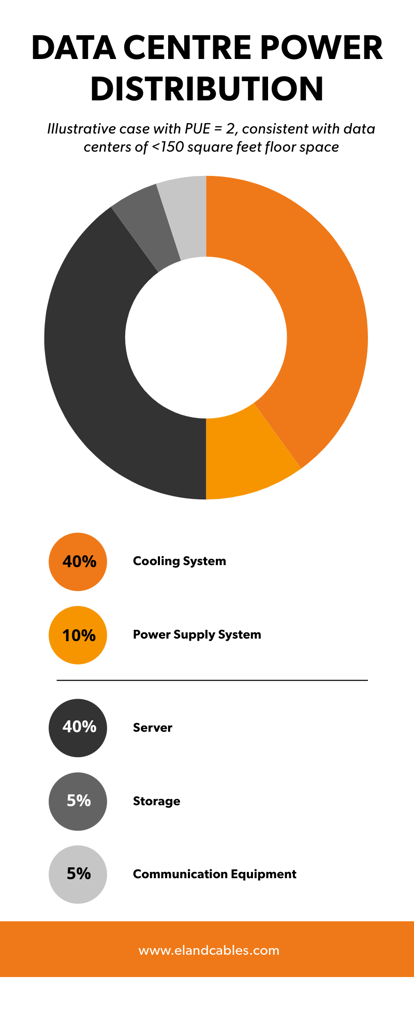
Where does that energy come from?
Most data centres primarily draw electricity from the local grid, so their operational emissions are strongly shaped by the regional generation mix and grid constraints. Many operators pursue “renewable” supply claims through a blend of mechanisms including energy credits, grid-matched procurement, and direct behind-the-meter generation, but these approaches can represent very different realities in terms of whether the electrons consumed are actually renewable at the time and place of use.Why on-site generation and microgrids are gaining attention
Even with strong grid connections, reliability requirements push data centres to add layers of resilience, traditionally through UPS systems and standby generation, while newer designs increasingly evaluate microgrids, battery energy storage, and alternative firm power to improve flexibility and reduce carbon exposure. These configurations can also help bridge construction phasing, mitigate connection delays, and support participation in demand-response or ancillary services where markets allow.
What this means for electrical infrastructure (and cables)
Energy procurement is only the starting point: once power arrives onsite it must be stepped down, protected, and distributed reliably to critical systems across the facility, so electrical design choices directly influence uptime and operational continuity.
This begins at the grid interface, where upstream network requirements can shape feasibility and delivery timelines, and continues through MV intake, distribution and transformation down to low voltage where it feeds HVAC, fire suppression systems, and IT loads. It makes cable specification (ratings, installation method, environment, and compliance) a practical determinant of maintainability and lifecycle resilience.
Resilience starts with the Power Path
Data centre energy demand will keep rising as digital services expand and compute density increases, but the real differentiator is how effectively that energy is converted into supporting consistent uptime. Whether power is sourced through the grid, renewables procurement, or onsite measures, the outcome depends on the integrity of the electrical pathway - designed, specified, and installed to minimise risk across the full lifecycle.
That’s where the fundamentals matter: compliant products, verified performance, and the right technical support to connect MV and LV distribution safely and reliably. At Eland Cables, we support hyperscale data centre projects worldwide with the specialist cables that help ensure critical power systems perform exactly as intended, end-to-end.