The Elizabeth line: the biggest infrastructure project in a generation
As London’s first accessible railway, the Elizabeth Line is the result of the biggest infrastructure project in a generation even though the idea of it can be traced back over a century.
It might be a cliché but it’s been a journey with many stops along the way.
It was way back on the 15 May 2009 that construction of the Crossrail project began at Canary Wharf, with tunnelling work commencing in May 2012. The original opening date was planned for December 2018 but the complexities had even the most experienced of planners often stumped, having to combine both new purpose-built sections under central London with Victorian-era sections of the Great Eastern and Great Western mainlines. It requires trains to seamlessly transition between 3 signalling systems across the line.
The final phase – concluded in 2022 - integrated services from east to west into new central tunnels and stations, bringing the three railways together. This enabled services from Reading and Heathrow through to Abbey Wood and from Shenfield through to Paddington.
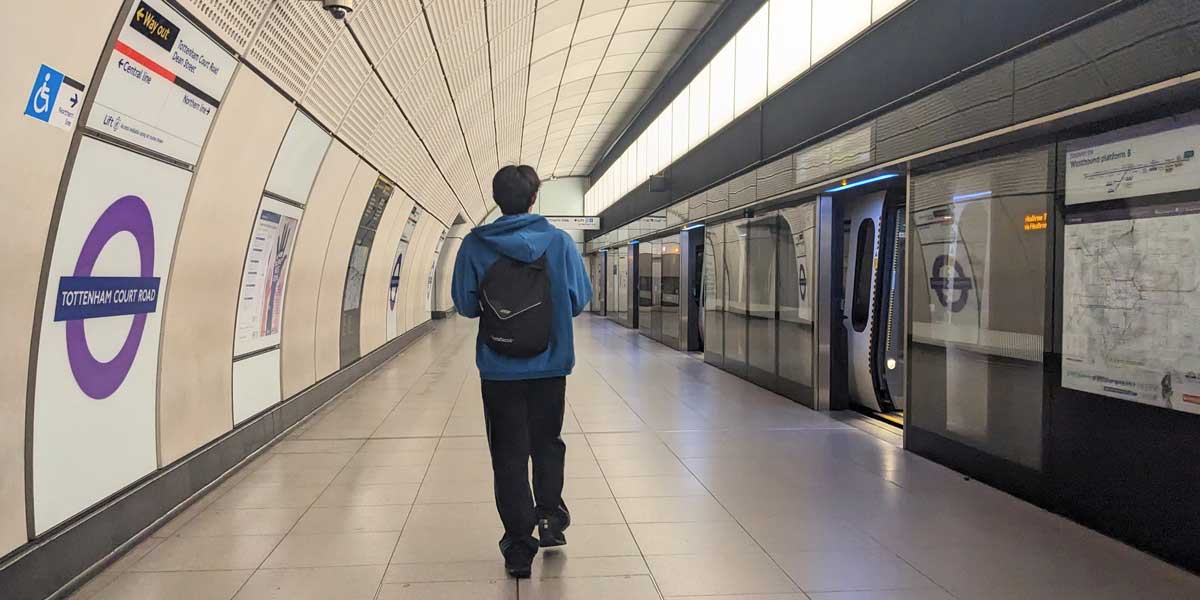
The Elizabeth line trains
The Elizabeth line trains are Class 345 Aventra, an electric multiple unit (EMU). The trains are air-conditioned walk-through and have nine carriages each, with space for up to 1,500 people.
The line has the distinct characteristic uncommon in the London Underground whereby surface stock trains – as big as the S stock of the Metropolitan and District lines – run in tube tunnels under the city, and then over to Berkshire and Essex on the surface.
TfL’s depot at Old Oak Common can house and maintain 42 of the Elizabeth line’s 70 new trains at any one time, thanks to a number of new features such as the incorporation of heating and cooling from ground sources, with solar panels and rainwater collection to wash the trains. There is even an automatic system than scans trains as they come in, thus making maintenance more time efficient.
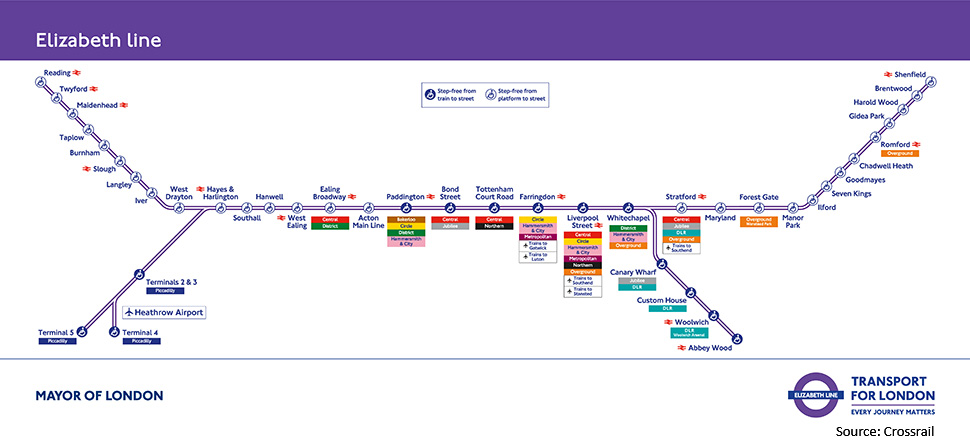
What stations are on the Elizabeth line?
The line connects 41 (10 new, 31 improved) stations with an estimated 600,000 passengers travelling on it each day, increasing the central London rail capacity by 10%.
As of May 2026, the Elizabeth line operates up to 24 trains per hour (a train every 2.5 minutes) in each direction during peak times within the central section between Paddington and Whitechapel.
The line dramatically reduced some journey times - Farringdon to Canary Wharf dropped from 24 minutes down to just 10 minutes; Liverpool Street to Woolwich is halved to 15 minutes, and Paddington to Abbey Wood near halved at just 29 minutes.
Just a year after it fully opened in 2023 Richard Holden, Transport Minister, said: "Almost a year to the day since the Elizabeth line was first launched, it has already supported more than 150 million journeys and, from today, even more people will be able to benefit from it."
Sadiq Khan, Mayor of London commented: "The Elizabeth line is the most significant addition to our transport network in decades and has proven to be much more than just a new railway - providing a crucial economic boost to the whole country and playing a vital role in drawing people back on to London's public transport.”
With over 2 million passengers using London Underground services each day this is a welcome addition to the network and yet another step forward in modernising this iconic transport system that started life back in the 1860s.