
What are standard cable drums weights and dimensions?
Cable drums come in many different sizes and weights depending somewhat on the materials they are made of. Usually materials include plywood, timber, plastic or metal, depending on the weight and type of cable they are expected to support and whether they are designed to be reusable and/or returnable. Additionally, the choice of material for the drums may depend on whether the drums and cables are being stored indoors or outdoors.
What determines the size of a cable drum?
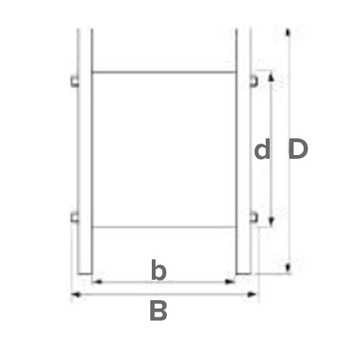
Drum sizes are typically determined by the flange height or drum diameter (D), the drum barrel or drum core (d), the width of the drum (B), and the inside width (b). See the diagram below for typical timber drums used by Eland Cables.
|
SIZE OF DRUM
|
DIAMETER OF DRUM
D
|
DIAMETER OF DRUM CORE
d |
WIDTH OF DRUM
B |
WIDTH BETWEEN SIDES
b |
NOMINAL DRUM WEIGHT
kg |
|
6 |
630 |
315 |
440 |
315 |
24 |
|
7 |
710 |
355 |
525 |
400 |
30 |
|
8 |
800 |
400 |
575 |
450 |
38 |
|
9 |
900 |
450 |
575 |
450 |
45 |
|
10 |
1000 |
500 |
685 |
560 |
56 |
|
12 |
1250 |
630 |
810 |
630 |
102 |
|
14 |
1400 |
710 |
940 |
750 |
195 |
|
16 |
1600 |
900 |
1090 |
900 |
255 |
|
18 |
1800 |
1120 |
1355 |
1120 |
433 |
|
20 |
2000 |
1000 |
1355 |
1120 |
462 |
How should electrical cable drums be stored?
The appropriate storage of cable drums and the electrical cable it contains will depend on both the type of drum and whether the cable itself is designed for indoor or outdoor use. The following points should be noted:
- - Plywood drums are not suitable for outside storage unless protected from moisture.
- - Wooden drums are not suitable for long-term storage outdoors unless protected from moisture.
- - Cable drums should be stored on firm and well-drained ground.
- - Cables should be covered from direct sunlight.
- - Protective lagging or covering should be used to protect against UV and weathering effects.
- - Any cable stored outdoors should be sealed to protect from water ingress.
- - Cables should be protected from mechanical damage.
- - Drums should be stored on their edges and never on the flanges.
- - Drums should be secured and prevented from rolling into one another, causing damage due to misalignment.
Correct drum storage
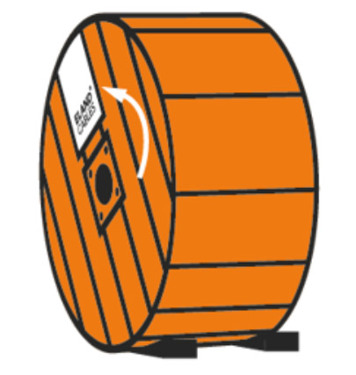
The drum should be stored upright, using wedges in the heels of the flanges.
Incorrect drum storage
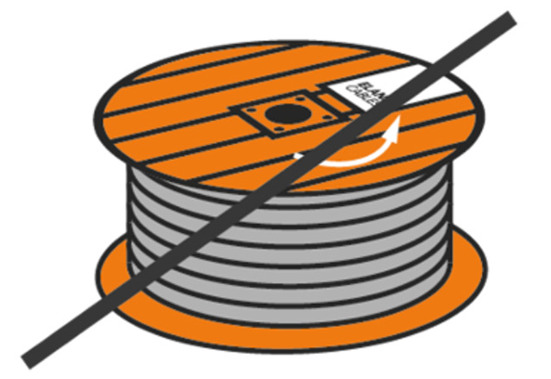
This type of storage is not recommended.
Drum storage - view from the top
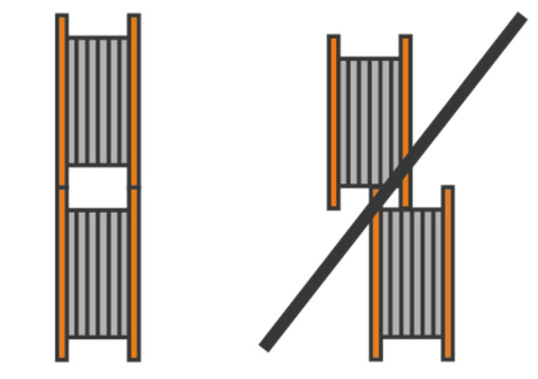
The drums should be aligned as shown.
(Source: BS8512 is the British Standard for code of practice for handling, installation and disposal of cables on wooden drums.)
People also ask

Electric cable drums can be heavy and difficult to handle manually. A proper risk assessment should be done before handling drums. Discover the correct methods for handling, lifting and shipping cable drums.

The current carrying capacity of an insulated conductor or cable is the maximum current (number of amperes) that it can continuously carry without...
Cable size selection is based on 3 main factors: Current carrying capacity, Voltage regulation, Short circuit rating. Read more about the cable sizes and what determinate them...

Cable Portfolio
View our comprehensive range of power, data, control and instrumentation cables and accessories
Go
