
What are the UK wiring colours, old and new?
UK wiring colours identify the function of each conductor in a cable, so that live, neutral and earth can be recognised quickly and safely during installation, maintenance or repair. The UK has used two different colour systems, and both are still found in properties today.
The current system was introduced on 1 April 2004 and became mandatory for all new fixed wiring from 31 March 2006, aligning UK practice with the IEC 60446 European harmonised colours. Any installation wired before this date will use the older colours, and many homes and buildings now contain a mix of both.
Single-phase wiring colours: old vs new
|
Conductor |
Old colour (pre-2004) |
New/current colour |
|
Live |
Red |
Brown |
|
Neutral |
Black |
Blue |
|
Earth |
Green (later green/yellow) |
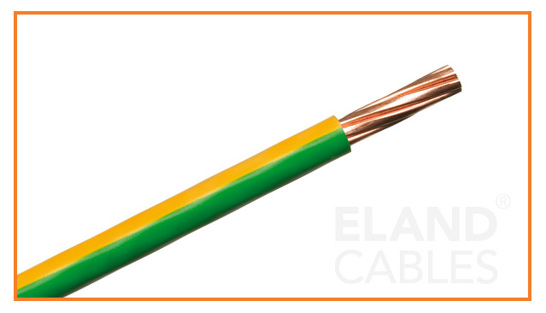
Green/yellow |
Three-phase wiring colours: old vs new
|
Conductor |
Old colour (pre-2004) |
New/current colour |
|
L1 |
Red |
Brown |
|
L2 |
Yellow |
Black |
|
L3 |
Blue |
Grey |
|
Neutral |
Black |
Blue |
|
Earth |
Green/yellow |
Green/yellow |
Twenty years on from the change, it’s still worth flagging that black used to mean neutral, but in the current three-phase system, black identifies the L2 live conductor. Blue has moved too, from a live phase colour to the neutral. Anyone working on wiring of an unknown age should always test before assuming a conductor's function, rather than relying on colour alone.
Why did the colours change?
The update brought UK wiring in line with the harmonised colours used across Europe, making it easier to work consistently across international installations and imported equipment. Flexible cables and cords, such as appliance flex, had already moved to brown, blue and green/yellow colours back in 1971, so the 2004/2006 change effectively brought fixed wiring into step with what flexible cables had used for decades.
What if my installation has both old and new colours?
Existing wiring installed before 2004 doesn't need to be replaced or rewired to meet the current colours. Where old and new colours exist within the same installation, for example following a partial rewire or a consumer unit upgrade, a warning notice identifying the mixed colours should be fitted at the distribution board or at the point where the two systems meet, so anyone working on the installation later knows to check carefully.
For commercial projects, speak to our technical experts
Whether you're specifying replacement cable for an older installation or need guidance on identifying conductors correctly, our technical experts are on hand to help.
Get in touch or explore our range of UK power and building wire to find the right cable for your project.
People also ask

Electricity is a versatile form of energy used to power anything from huge datacentres and critical systems to many of our everyday electric appliances.
The voltage rating of a cable is the highest voltage that may be continuously applied to a cable construction in compliance with the relevant cable standard or specification...
The most widely recognised International standards bodies are the IEC, the ISO, and CENELEC. IEC is the International Electrotechnical Commission, ISO International Organisation for Standardisation...

Cable Portfolio
View our comprehensive range of power, data, control and instrumentation cables and accessories
Go
