Plug-in solar: UK becomes the latest European country to legalise balcony solar panels
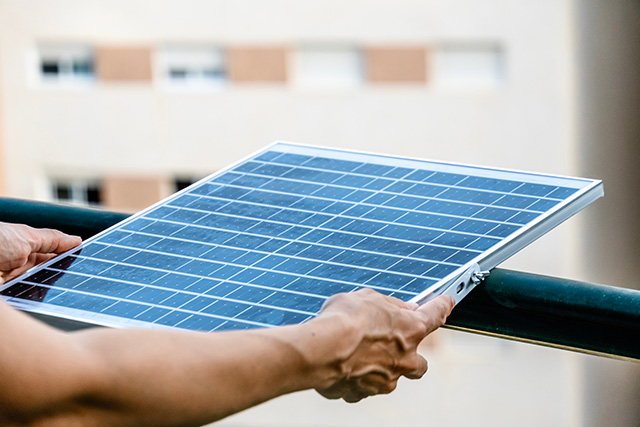
As of 27th August 2026, Britons can buy plug-in solar panel systems they can install themselves. These systems are also known as “plug-and-play" or “balcony” solar offer an alternative to traditional rooftop solar and solves the issue of space limitations as they can be fixed to a balcony or garden wall, making green energy a viable and affordable option for more people. This comes after government plans announced last year.
The legal changes follow rigorous, independent safety testing, covering all key electrical elements. Whilst Chapter 712 of 18th Edition, Amendment 4 BS7671 Wiring Regulations refers to changes for grid-tier solar systems, it is the SI 2026/848 made on 16 July 2026 that now means households in Great Britain can connect plug-in solar panels capable of generating up to 800 watts of power (enough to provide up to 20% of an average home’s electricity use) into the mains without the need for an electrician.
What are plug-in solar panels?
Plug-in solar panels are a type of lower-cost, portable solar panel that can be placed outdoors (such as on a balcony railing, garden fence, patio or shed roof). They're a cheaper, easy-to-install alternative to expensive rooftop solar panel systems, an added advantage is that, as they're portable, they are easily taken when moving homes.
They're a particularly good option for people in flats, where you're unlikely to able to install a full rooftop solar panel system.
It’s not just exclusive to homeowners, renters can install plug-in solar panels as long as they have permission from their landlord.
These panels are set to be available from electrical wholesalers, big name retailers including B&Q, Currys and Amazon, and even in supermarkets such as Lidl meaning consumers can pick up a plug-in solar system along with their weekly shop, although given the size and weight of these devices, it's expected that many will be bought online.
How do plug-in solar panels work?
Plug-in solar panels work in the same way as rooftop solar, by generating electricity from sunlight. The panels then feed this electricity directly into your home's electrical circuit, via a standard wall socket.
Any appliance which is switched on will automatically and instantly use this free solar-generated power before pulling electricity from the National Grid at a charge to the homeowner.
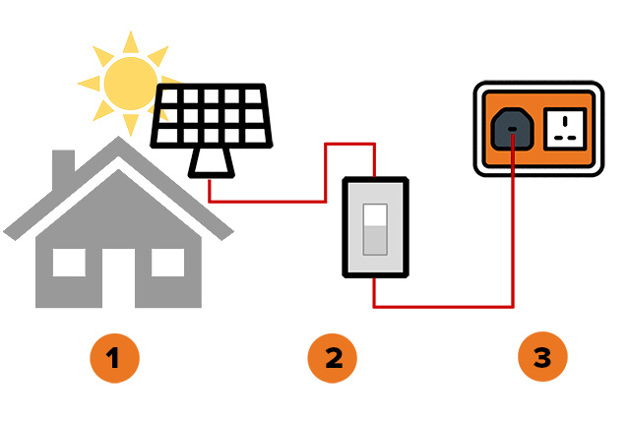
| 1 | 2 | 3 |
|
Solar panel - south-facing usually - converts sunlight into |
A microinverter converts the DC electricity into AC (Alternating Current) which is suitable for homes | An AC cable plugs into standard plug socket and contributes to powering the home |
Plug-in solar across Europe
The DIY panels are already fitted to about 1.5m balconies in Germany where they are known as a Balkonkraftwerk (balcony power plant).
There is also growing interest in balcony solar across Spain, Italy, Poland and in France.
In Spain, where two thirds of the population live in apartments and installing panels on the roof requires the consent of a majority of the building’s residents, this DIY technology has obvious advantages - with solar balconies, no such consent is required unless the façade is listed as of historic interest or there is a specific prohibition from the residents’ association or the local authority. Furthermore, as long as the installation does not exceed 800 watts it doesn’t require certification.
Belgium, which outlawed plug-in solar devices over fears of having unregistered systems feeding into the grid, lifted its ban in April 2025. Out of all the EU member states, only Sweden and Hungary maintain prohibitions against self-installed plug-in solar.
Cities such as Helsinki are already experimenting with buildings using solar panel cladding. In Helsinki's smart Kalasatama district, projects like the EXCESS Positive Energy Building combine wall-bound hybrid solar panels with geothermal energy to create structures that produce more energy than they consume, even in a northern climate.
What’s next for home solar power?
Whilst the current regulations in the UK only allow people to plug in one device per property, this may change in the future.
There is already record demand for solar power across the country. Figures released by MCS (Microgeneration Certification Scheme) recently showed there were almost 150,000 solar panel certified installations in the first six months of 2026, up 17% on the previous highest start to a year in 2025. That is the equivalent to an installation every 74 seconds.
Battery installations have also risen significantly, with installations almost double the same period last year with 36,000 certified installations.
Legalising plug-in solar panels builds on savings homeowners can already make up to £480 a year from rooftop solar, helping more people in a range of property types generate their own clean electricity and cut their energy bills.
Similar plug-in solar kits currently in Europe for £400-600 (before extra costs for mounting etc). The Department for Energy Security & Net Zero (DESNZ) says plug-in solar could save households about £70–£110 a year on energy bills. Based on these costs and savings, the average break-even point is about four to six years. The break-even point will differ depending on size, location, energy use and weather. Consumers also can’t currently sell unused power back to the grid with systems.
Technology moves at a fast-pace so it's likely that plug-in systems will have developed further by the time consumers are currently expected to break even, but for now it's a positive step in bringing the green energy transition into more homes, making it even easier for people to make nature-net positive, clean energy choices for themselves.